All story: June 2012
My Web page

The Wolf and the Lamb

Saturday, 30 June 2012

A lamb was grazing with a flock of sheep one day. She soon found some sweet grass at the edge of the field. Farther and farther she went, away from the others.
She was enjoying herself so much that she did not notice a wolf coming nearer to her. However, when it pounced on her, she was quick to start pleading, “Please, please don’t eat me yet. My stomach is full of grass. If you wait a while, I will taste much better.”
The wolf thought that was a good idea, so he sat down and waited. After a while, the lamb said, “If you allow me to dance, the grass in my stomach will be digested faster.” Again the wolf agreed.
While the lamb was dancing, she had a new idea. She said, “Please take the bell from around my neck. If you ring it as hard as you can, I will be able to dance even faster.”
The wolf took the bell and rang it as hard as he could. The shepherd heard the bell ringing nd quickly sent his dogs to find the missing lamb. The barking dogs frightened the wolf away and saved the lamb’s life.
The gentle and weak can sometimes be cleverer than fierce and strong.

The Three Cows


There was a green and fresh pasture, in which three cows lived, a white cow, a black cow and a reddish-brown one. The cows were kind to each other. They were nice to each other. They used to graze in the meadow together. and they used to sleep near each other.
Till it happened one day, the reddish-brown colored lion of the forest happened to pass that way. The lion was unhappy. It was hungry, and was looking for a prey. On catching sight of the cows it became glad, but couldn't attack them, because they were together. So, the lion sat in a corner and waited till the cows would separate from each other.
The cows were together and wouldn’t part away from each other, because they knew that if they were together, no predator could attack them. The lion lay in ambush nearby for two or three days. But the cows continued to remain together, and wouldn’t separate from each other. The lion became unhappy.
A plan occurred to it. It went towards the cows, greeted them and said: “How are you my friends?” Are you fine? I have been remembering you for a long time, but because I am too busy, I can’t come to you and ask about your health.
Today I said to myself: “Anyhow I should come and see you from near and visit you.” The reddish-brown cow said: “Sir, your coming has really pleased us and brightened our pasture.”
The lion said: “I have always remembered you, and have even ordered a better pasture made ready for you.” Reddish-brown cow said: “Sir, you have really obliged us and we are very thankful to you.”
Both the white and the black cows were troubled by what their friend, the reddish-brown cow said, and were grieved at its thoughtlessness. They feared lest it should be deceived.
They said to each other: Which forest has not got a better pasture? Why does the reddish-brown cow believe what the lion says? Doesn’t it know that lions seek other animals only to prey on them?
The reddish-brown cow became more and more a close friend of the lion each day. The black cow and the white cow advised it as much as they could, but with no avail.
One day the lion said to the reddish-brown cow: “You know that the color of our bodies is dark and that the color of the body of the white cow is light, and you also know that the light color is the opposite of the dark color. It would be very good if I eat the white cow, so that there will be no difference among us any longer and that we will be able to live together well.”
The reddish-brown cow accepted the saying of the selfish lion and started talking to the black cow to keep it busy, so that the lion could eat the white cow with more ease. The white cow was left alone and was killed, while the black and the reddish-brown cows were busy with idle talks.
Two or three days passed since the lion had devoured the white cow. The lion, angry and uneasy, was lying in a corner, and the reddish-brown cow was moving around the lion and grazing. The lion called the reddish-brown cow. The cow answered: “Yes sir!”
The lion said: “The color of my body and the color of your body are reddish-brown, and black does not go with our color. It will be very good if I eat the black cow, so that in this forest we all will be of the same color.” The reddish-brown cow accepted and moved away from the black cow.
The lion attacked and devoured the black cow, too. And as for the reddish-brown cow, it was so filled with joy that it didn’t know what to do. It roamed and grazed and said to itself: “It is only me who has the color of the lion...” A few days passed since the black cow had been devoured by the lion. The lion roared and said. “O the reddish-brown cow! Where are you?”
The reddish-brown cow, shaking with fear, went forward and said: “Yes sir!” The lion said: “Today it is your turn, get yourself ready, I am going to eat you.” The reddish-brown cow, with great fear & horror said: “Why sir, I am your friend. I did whatever you said. So why do you want to eat me?”
The lion roared and said: “Friend of a friendless!” How is it possible that a lion makes friendship with a cow? No matter how much the reddish-brown cow begged and entreated, the lion didn’t accept its words. The lion attacked the cow.
The cow said: “Mr. Lion, please allow me to cry out three times before you eat me.” The lion said: “Quickly, quickly!” The reddish-brown cow cried out: “I was eaten the very day the white cow was eaten. I was eaten the very day the black cow was eaten. I was eaten the very day I made.... with you.” The lion devoured the reddish-brown cow very quickly. Then it said to itself: “I have finished my job in this forest. Now I had better go to other forests.”
Divide and rule policy.

The Thirsty Crow


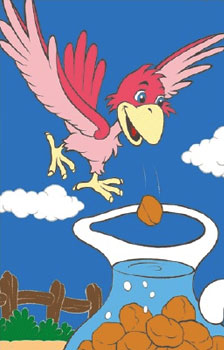
Short StoriesOne hot day, a thirsty crow flew all over the fields looking for water. For a long time, she could not find any. She felt very weak, almost giving up hope.
Suddenly, she saw a water jug below her. She flew straight down to see if there was any water inside. Yes, she could see some water inside the jug!
The crow tried to push her head into the jug. Sadly, she found that the neck of the jug was too narrow. Then she tried to push the jug down for the water to flow out. She found that the jug was too heavy.
The crow thought hard for a while. Then looking around her, she saw some pebbles. She suddenly had a good idea. She started picking up the pebbles one by one, dropping each into the jug. As more and more pebbles filled the jug, the water level kept rising. Soon it was high enough for the crow to drink. Her plan had worked!
If you try hard enough, you may soon find an answer to your problem.

The Stranger in the Garden


Short Stories - The Stranger in the GardenOnce upon a time there was a man who had a big garden. He had planted many fruit trees and cared for them till they bear fruits. Now he wanted to pick up the fruits and sell them to make money for his family.
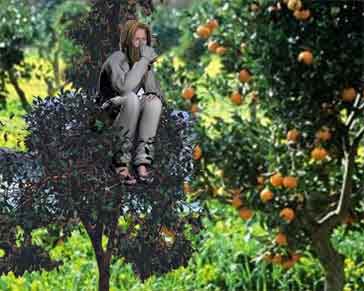
One fine day while picking fruits with his son, the man saw a stranger sitting on the branch of a tree and picking the fruits. This man become angry and shouted, “Hey you! What are you doing on my tree? Aren’t you ashamed of stealing fruits in the day time?” The stranger on the branch just looked at the gardener but didn’t reply, and continued picking the fruits. The gardener was very angry and shouted again, “For a whole year I have taken care of these trees, you have no right to take the fruits without my permission so come down at once!”
The stranger on the tree answered, “Why should I come down? This is the garden of God and I am the servant of God, so I have the right to pick these fruits and you should not interfere between the work of God and his servant.” The gardener was very surprised at this answer and thought of a plan. He called his son and said, “go bring a rope and get this man down from the tree.” His son brought the rope and the gardener ordered him to tie the stranger to the tree. The gardener then took a stick and started to beat the stranger. The stranger began to scream. “Why are you beating me? You have no right to do this.”
The gardener paid no attention and continued beating him. The stranger screamed, “Don’t you fear God, you are beating an innocent man? The gardener answered, “Why should I fear? This wood in my hand belongs to God and I am too the servant of God, so I have nothing to fear, and you shouldn’t interfere with the work of God and his servant.” The stranger hesitated and then spoke, “Wait don’t beat me, I am sorry for taking the fruits. This is your garden and I should seek your permission before taking the fruits. So, please forgive and set me free.”
The gardener smiled and said, “Since you have now realized your mistake, I will forgive you but remember that God has given all his servants brains so every person’s deeds are in his own hands.” Then the gardener untied him and let him go free.

The Rope


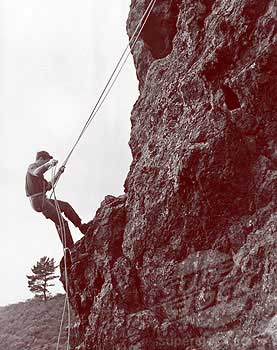
Short Stories - The RopeThe night fell heavy in the heights of the mountains and the man could not see anything. All was black. Zero visibility, and the moon and the stars were covered by the clouds. As he was climbing only a few feet away from the top of the mountain, he slipped and fell in to the air, falling at great speed. He could only see black spots as he went down, and the terrible sensation of being sucked by gravity.
He kept falling, and in the moments of great fear, it came to his mind all the good and bad episodes of his life. He was thinking now about how close death was getting, when all of a sudden he felt the rope tied to his waist pull him very hard. His body was hanging in the air.
Only the rope was holding him and in that moment of stillness he had no other choice other to scream: “Help me God.”
All of a sudden a deep voice coming from the sky answered, “What do you want me to do?”
“Save me God.”
“Do you really think I can save you?”
“Of course I believe You can.”
“Then cut the rope tied to your waist.”
There was a moment of silence and the man decided to hold on to the rope with all his strength. The rescue team tells that the next day a climber was found dead and frozen, his body hanging from a rope. His hands holding tight to it. Only one foot away from the ground.
And We? How attached we are to our rope will we let go??? Don’t ever doubt about the words of God. We should never say that He has forgotten us or abandoned us.
 

The Most Beautiful Heart


Short Stories - The Most Beautiful HeartOne day a young man was standing in the middle of the town proclaiming that he had the most beautiful heart in the whole valley.
A large crowd gathered and they all admired his heart for it was perfect. There was not a mark or a flaw in it. Yes, they all agreed it truly was the most beautiful heart they had ever seen.
The young man was very proud and boasted more loudly about his beautiful heart.
Suddenly, an old man appeared at the front of the crowd and said, “Why your heart is not nearly as beautiful as mine.”
The crowd and the young man looked at the old man’s heart. It was beating strongly ... but full of scars. It had places where pieces had been removed and other pieces put in ... but they didn’t fit quite right and there were several jagged edges.
In fact, in some places there were deep gouges where whole pieces were missing. The people starred ... how could he say his heart is more beautiful, they thought?
The young man looked at the old man’s heart and saw its state and laughed.
“You must be joking,” he said. “Compare your heart with mine ... mine is perfect and yours is a mess of scars and tears.”
“Yes,” said the old man, “Yours is perfect looking ... but I would never trade with you. You see, every scar represents a person to whom I have given my love..... I tear out a piece of my heart and
give it to them ... and often they give me a piece of their heart which fits into the empty place in my heart ... but because the pieces aren’t exact, I have some rough edges, which I cherish, because they remind me of the love we shared.
Sometimes I have given pieces of my heart away ... and the other person hasn’t returned a piece of his heart to me. These are the empty gouges ... giving love is taking a chance. Although these
gouges are painful, they stay open, reminding me of the love I have for these people too ... and I hope someday they may return and fill the space I have waiting. So now do you see what true beauty is?”
The young man stood silently with tears running down his cheeks. He walked up to the old man, reached into his perfect young and beautiful heart, and ripped a piece out. He offered it to the old man with trembling hands.
The old man took his offering, placed it in his heart and then took a piece from his old scarred heart and placed it in the wound in the young man’s heart. It fit.... but not perfectly, as there were
some jagged edges.
The young man looked at his heart, not perfect anymore but more beautiful than ever, since love from the old man’s heart flowed into his. They embraced and walked away side by side.
Physical perfection is not always beautiful.

The Milkmaid and her Pail


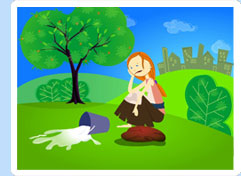
Short StoriesPatty the Milkmaid was going to market carrying her milk in a pail on her head.
As she went along, she began calculating what she would do with the money she would get for the milk. I'll buy some fowls from Farmer Brown," said she, "and they will lay eggs each morning, which I will sell to the parson's wife..
With the money that I get from the sale of these eggs, I'll buy myself a new dimity frock and a chip hat; and when I go to market, won't all the young men come up and speak to me!Short Stories
Polly Shaw will be so jealous; but I don't care. I shall just look at her and toss my head like this." As she spoke that, she tossed her head back and the pail fell off it, and all the milk was spilt!
MORAL: DO NOT COUNT YOUR CHICKENS BEFORE THEY ARE HATCHED.

The Hare and the Tortoise


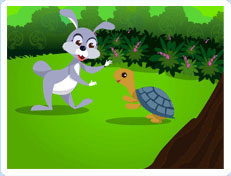
Short StoriesThere once was a speedy Hare who bragged about how fast he could run. Tired of hearing him boast, the Tortoise challenged him to a race. All the animals in the forest gathered to watch.
The Hare ran down the road for a while and then and paused to rest. He looked back at the tortoise and cried out, "How do you expect to win this race when you are walking along at your slow, slow pace?"

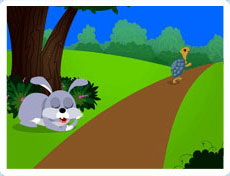
The Hare stretched himself out alongside the road and fell asleep, thinking, "There is plenty of time to relax."
The Tortoise walked and walked; never ever stopping until he came to the finish line.
Short Stories

The animals who were watching cheered so loudly for Tortoise, that they woke up Hare. The Hare stretched and yawned and began to run again, but it was too late. Tortoise was already over the line.

MORAL: SLOW AND STEADY WINS THE RACE

Butterfly and Cocoon


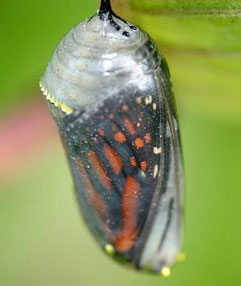
Short Stories - Butterfly and CocoonA man found a cocoon of a butterfly. One day a small opening appeared; he sat and watched the butterfly for several hours as it struggled to force its body through that little hole. Then it seemed to stop making any progress. It appeared as if it had gotten as far as it could and it could go no farther.
Then the man decided to help the butterfly, so he took a pair of scissors and snipped off the remaining bit of the cocoon. The butterfly then emerged easily. But it had a swollen body and small, shriveled wings.
The man continued to watch the butterfly because he expected that, at any moment, the wings would enlarge and expand to be able to support the body, which would contract in time.
Neither happened! In fact, the butterfly spent the rest of its life crawling around with a swollen body and shriveled wings. It never was able to fly.
What this man in his kindness and haste did not understand was that the restricting cocoon and the struggle required for the butterfly to get through the tiny opening were nature's way of forcing fluid from the body of the butterfly into its wings so that it would be ready for flight once it achieved its freedom from the cocoon.
Sometimes struggles are exactly what we need in our life. If nature allowed us to go through our life without any obstacles, it would cripple us. We would not be as strong as what we could have been. And we could never fly...
 

The Fox and the Stork


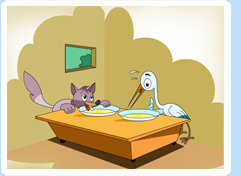
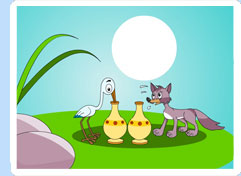
Short StoriesA selfish fox once invited a stork to dinner at his home and for a joke put nothing before her but some soup in a very shallow dish. The fox could easily lap this up, but the Stork could only wet the end of her long bill in it, and stayed hungry.
“I am sorry that the soup is not to your liking," said the fox with a sly smile.
"Oh, please do not apologise," said the Stork. "I hope you will return this visit, and come and dine with me too sometime." So a day was appointed when the Fox should visit the Stork.
Short StoriesFinally, when they were seated at the table, the Stork served them both some soup in a very long‑necked jar with a narrow mouth. The stork drank the soup easily but the fox could not insert his snout into the tall jar. This time it was the Fox’s turn to go hungry.
MORAL: ONE BAD TURN DESERVES ANOTHER.

The Devoted Mother


Short Stories - Devoted Mother 1A mother duck and her little ducklings were on their way to the lake one day. The ducklings were very happy following their mother and quack-quacking along the way.
All of a sudden the mother duck saw a fox in the distance. She was frightened and shouted, “Children, hurry to the lake. There’s a fox!”
The ducklings hurried towards the lake. The mother duck wondered what to do. She began to walk back and forth dragging one wing on the ground.
Short Stories - Devoted Mother 2When the fox saw her he became happy. He said to himself, “It seems that she’s hurt and can’t fly! I can easily catch and eat her!” Then he ran towards her.
The mother duck ran, leading the fox away from the lake. The fox followed her. Now he wouldn’t be able to harm her ducklings. The mother duck looked towards her ducklings and saw that they had reached the lake. She was relieved, so she stopped and took a deep breath.
The fox thought she was tired and he came closer, but the mother duck quickly spread her wings and rose up in the air. She landed in the middle of the lake and her ducklings swam to her.
The fox stared in disbelief at the mother duck and her ducklings. He could not reach them because they were in the middle of the lake.
Dear children, some birds drag one of their wings on the ground when an enemy is going to attack. In this way they fool their enemies into thinking they are hurt. When the enemy follows them this gives their children time to escape.

The Bundle of Sticks


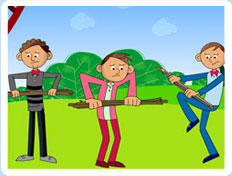
Short StoriesA father had a family of sons who were always quarreling among themselves. When he failed to solve their fights with his advice, he decided to give them a practical illustration of the evils of disunion; and for this purpose he one day told them to bring him a bundle of sticks.
When they had done so, he placed the bundle into the hands of each of them in succession, and ordered them to break it in pieces. They tried with all their strength, but were not able to do it.
Next, he opened the bundle, took the sticks separately, one by one, and again put them into his sons' hands, and asked them to break it, and they could do so very easily.
Short StoriesHe then told them: "My sons, if you stay together and help each other, you will be as strong as this bundle, and no enemy can beat you; but if you are divided among yourselves, you will be broken as easily as these sticks."
The sons understood the message, thanked, and promised the father to always be together no matter what.
Moral: Union gives strength.

The Boy and the Apple Tree


Short StoriesA long time ago, there was a huge apple tree. A little boy loved to come and play around it everyday. He climbed to the treetop, ate the apples, and took a nap under the shadow. He loved the tree and the tree loved to play with him. Time went by, the little boy had grown up and he no
longer played around the tree every day.
One day, the boy came back to the tree and he looked sad.
“Come and play with me”, the tree asked the boy.
“I am no longer a kid, I do not play around trees any more” the boy replied.
“I want toys. I need money to buy them.”
“Sorry, but I do not have money, but you can pick all my apples and sell them. So, you will have money.”
The boy was so excited. He grabbed all the apples on the tree and left happily. The boy never came back after he picked the apples. The tree was sad.
One day, the boy who now turned into a man returned and the tree was excited.
“Come and play with me” the tree said.
“I do not have time to play. I have to work for my family. We need a house for shelter. Can you help me?”
“Sorry, but I do not have any house. But you can chop off my branches to build your house.” So the man cut all the branches of the tree and left happily. The tree was glad to see him happy but the man never came back since then. The tree was again lonely and sad.
One hot summer day, the man returned and the tree was delighted.
“Come and play with me!” the tree said.
“I am getting old. I want to go sailing to relax myself. Can you give me a boat?” said the man.
“Use my trunk to build your boat. You can sail far away and be happy.”
So the man cut the tree trunk to make a boat. He went sailing and never showed up for a long time.
Finally, the man returned after many years. “Sorry, my boy. But I do not have anything for you anymore. No more apples for you”, the tree said. “No problem, I do not have any teeth to bite” the
man replied.
“No more trunk for you to climb on.” “I am too old for that now” the man said. “I really cannot give you anything, the only thing left is my dying roots,” the tree said with tears.
“I do not need much now, just a place to rest. I am tired after all these years,” the man replied.
“Good! Old tree roots are the best place to lean on and rest, come sit down with me and rest.” The man sat down and the tree was glad and smiled with tears.
This is a story of everyone. The tree is like our parents. When we were young, we loved to play with our Mum and Dad. When we grow up, we leave them; only come to them when we need something or when we are in trouble. No matter what, parents will always be there and give everything they could just to make you happy.
You may think the boy is cruel to the tree, but that is how all of us treat our parents. We take them for granted; we don’t appreciate all they do for us, until it’s too late. Wallahi, May Allah forgives us of our shortcomings and may He guide us.

The Ant and the Grasshopper


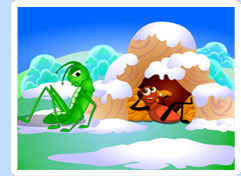
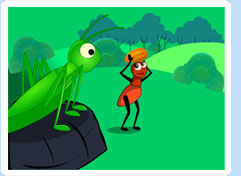
Short StoriesIn a field one summer's day a Grasshopper was hopping about, chirping and singing to its heart's content. An Ant passed by, bearing along with great effort an ear of corn he was taking to the nest.
"Why not come and chat with me," said the Grasshopper, "instead of toiling and moiling away?" "I am helping to lay up food for the winter," said the Ant, "and recommend you to do the same." "Why bother about winter?" said the Grasshopper; "we have got plenty of food at present."
Short StoriesBut the Ant went on its way and continued its toil. When the winter came the Grasshopper found itself dying of hunger, while it saw the ants distributing, every day, corn and grain from the stores they had collected in the summer.
Then the Grasshopper knew..
MORAL: WORK TODAY AND YOU CAN REAP THE BENEFITS TOMORROW!
 

Sand and Stone


Short Stories - Sand and StoneA story tells that two friends were walking through the desert. During some point of the journey they had an argument, and one friend slapped the other one in the face. The one who got slapped was hurt, but without saying anything, wrote in the sand: “TODAY MY BEST FRIEND SLAPPED ME IN THE FACE.”
They kept on walking until they found an oasis, where they decided to take a bath. The one, who had been slapped, got stuck in the mire and started drowning, but the friend saved him. After the friend recovered from the near drowning, he wrote on a stone: “TODAY MY BEST FRIEND SAVED MY LIFE.”
The friend who had slapped and saved his best friend asked him, “After I hurt you, you wrote in the sand and now, you write on a stone, why?”
The other friend replied: “When someone hurts us, we should write it down in sand where winds of forgiveness can erase it away. But, when someone does something good for us, we must engrave it in stone where no wind can ever erase it.”
Learn to write your hurts in the sand, and to carve your benefits in stone.

Love and Time


Short Stories - Love and TimeOnce upon a time, there was an island where all the feelings lived: Happiness, Sadness, Knowledge, and all of the others, including Love. One day it was announced to the feelings that the island would sink, so all constructed boats and left. Except for Love.
Love was the only one who stayed. Love wanted to hold out until the last possible moment. When the island had almost sunk, Love decided to ask for help.
Richness was passing by Love in a grand boat. Love said, “Richness, can you take me with you?”
Richness answered, “No, I can’t. There is a lot of gold and silver in my boat. There is no place here for you.”
Love decided to ask Vanity who was also passing by in a beautiful vessel. “Vanity, please help me!” “I can’t help you, Love. You are all wet and might damage my boat,” Vanity answered.
Sadness was close by so Love asked, “Sadness, let me go with you.” “Oh . . . Love, I am so sad that I need to be by myself!” Happiness passed by Love, too, but she was so happy that she did not even hear when Love called her.
Suddenly, there was a voice, “Come, Love, I will take you.” It was an elder.
So blessed and overjoyed, Love even forgot to ask the elder where they were going. When they arrived at dry land, the elder went his own way. Realizing how much was owed the elder, Love asked Knowledge, another elder, “Who Helped me?”
“It was Time,” Knowledge answered.
“Time?” asked Love. “But why did Time help me?” Knowledge smiled with deep wisdom and answered, “Because only Time is capable of understanding how valuable Love is.”

Generosity


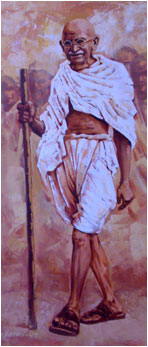
Short Stories - GandhijiMahatma Gandhi went from city to city, village to village collecting funds for the Charkha Sangh. During one of his tours he addressed a meeting in Orissa.
After his speech a poor old woman got up. She was bent with age, her hair was grey and her clothes were in tatters. The volunteers tried to stop her, but she fought her way to the place where Gandhi Ji was sitting. “I must see him,” she insisted and going up to Gandhi Ji touched his feet.
Then from the folds of her sari she brought out a copper coin and placed it at his feet. Gandhi Ji picked up the copper coin and put it away carefully. The Charkha Sangh funds were under the charge of Jamnalal Bajaj. He asked Gandhi Ji for the coin but Gandhi Ji refused.
“I keep cheques worth thousands of rupees for the Charkha Sangh,” Jamnalal Bajaj said laughingly “yet you won’t trust me with a copper coin.” “This copper coin is worth much more than those thousands” Gandhi Ji said. “If a man has several lakhs and he gives away a thousand or two, it doesn’t mean much.”
But this coin was perhaps all that the poor woman possessed. She gave me all she had. That was very generous of her. What a great sacrifice she made. That is why I value this copper coin more than a crore of rupees.
"Overlook and forgive the weakness of generous people, because if they fall down, God gives his hand in their hands and helps them…." 

The Fox who got cought in the tree trunk


Short Stories - Fox who got coughtOnce upon a time, there was a hungry fox that was looking for something to eat. He was very hungry. No matter how hard he tried, the fox could not find food. Finally he went to the edge of the forest and searched there for food. Suddenly he caught sight of a big tree with a hole in it.
Inside the hole was a package. The hungry fox immediately thought that there might be food in it, and he became very happy. He jumped into the hole and when he opened the package, he saw there were a lot of food, bread, meat and fruit in it!
An old woodcutter had placed the food in the tree trunk while he cut down trees in the forest. He was going to eat it for his lunch.
The fox happily began to eat. After the fox had finished eating, he felt thirsty and decided to leave the trunk and drink some water from a nearby spring. However, no matter how hard he tried, he could not get out of the hole. Do you know why? Yes, the fox had eaten so much food that he became too big to fit through the hole.
The fox was very sad and upset. He told himself, “I wish that I had thought a little before jumping into the hole.”
Yes children, this is the result of doing something without thinking about it first.

Don't Cha Don't Change the Worldnge the World


Short StoriesOnce upon a time, there was a king who ruled a prosperous country. One day, he went for a trip to some distant areas of his country. When he was back to his palace, he complained that his feet were very painful, because it was the first time that he went for such a long trip, and the road that he went through was very rough and stony. He then ordered his people to cover every road of the entire country with leather.
Definitely, this would need thousands of cows’ skin, and would cost ahuge amount of money.
Then one of his wise servants dared himself to tell the king, “Why do you have to spend that unnecessary amount of money? Why don’t you just cut a little piece of leather to cover your feet?”
The king was surprised, but he later agreed to his suggestion, to make a “shoe” for himself.
There is actually a valuable lesson of life in this story: to make this world a happy place to live, you better change yourself - your heart; and not the world.

A Hole in the Fence


Short Stories - True WealthThere once was a little boy who had a bad temper. His Father gave him a bag of nails and told him that every time he lost his temper, he must hammer a nail into the back of the fence.
The first day the boy had driven 37 nails into the fence. Over the next few weeks, as he learned to control his anger, the number of nails hammered daily gradually dwindled down. He discovered it was easier to hold his temper than to drive those nails into the fence....
Finally the day came when the boy didn’t lose his temper at all. He told his father about it and the father suggested that the boy now pull out one nail for each day that he was able to hold his temper. The day passed and the young boy was finally able to tell his father that all the nails were gone. The father took his son by the hand and led him to the fence. He said, “You have done well, my son, but look at the holes in the fence.”
The fence will never be the same. When you say things in anger, they leave a scar just like this one. You can put a knife in a man and draw it out. It won’t matter how many times you say I’m sorry, the wound is still there. A verbal wound is as bad as a physical one.
Friends and loved ones are a very rare jewel, indeed. They make you smile and encourage you to succeed. They lend an ear, they share a word of praise, and they always want to open their hearts to us. Water your relationships with kindness… and they will grow. So be careful little lips what you say…! And you won't chase friendships away.

Goldilocks and the Three Bears


Goldilocks and the Three Bears

goldilocks and the three bearsOnce upon a time there were Three Bears, who lived together in a house of their own in a wood. One of them was a Little, Small, Wee Bear; and one was a Middle-sized Bear, and the other was a Great, Huge Bear. They had each a pot for their porridge, a little pot for the Little, Small, Wee Bear; and a middle-sized pot for the Middle Bear; and a great pot for the Great, Huge Bear. And they had each a chair to sit in; a little chair for the Little, Small, Wee Bear; and a middle-sized chair for the Middle Bear; and a great chair for the Great, Huge Bear. And they had each a bed to sleep in; a little bed for the Little, Small, Wee Bear; and a middle-sized bed for the Middle Bear; and a great bed for the Great, Huge Bear.
One day, after they had made the porridge for their breakfast, and poured it into their porridge-pots, they walked out into the wood while the porridge was cooling, that they might not burn their mouths by beginning too soon to eat it.

The number three makes an excellent structure for a story. Like The Three Little PigsGoldilocks and the Three Bears is one of those tales that stays rooted in the mind never to be forgotten.
As usual, we have turned to Andrew Lang for our classic text – this one comes from his Green Fairy Book. But Andrew Lang devotees will notice that we have made one big change to his version. It concerns the heroine of the tale, and we thought that most of our listeners would expect her to be presented the way we have done, and probably children will like her best in tihs guise too (we think so, anyway). If you are curious, you can read theAndrew Lang original here.
The Pondlife Introduction finds Bertie and Tim the Tadpole playing I Spy Something Green.
Read by Natasha.
See PRC Fairytales & Rules of Three
Duration 13 Minutes.

Once upon a time there were Three Bears, who lived together in a house of their own in a wood. One of them was a Little, Small, Wee Bear; and one was a Middle-sized Bear, and the other was a Great, Huge Bear. They had each a pot for their porridge, a little pot for the Little, Small, Wee Bear; and a middle-sized pot for the Middle Bear; and a great pot for the Great, Huge Bear. And they had each a chair to sit in; a little chair for the Little, Small, Wee Bear; and a middle-sized chair for the Middle Bear; and a great chair for the Great, Huge Bear. And they had each a bed to sleep in; a little bed for the Little, Small, Wee Bear; and a middle-sized bed for the Middle Bear; and a great bed for the Great, Huge Bear.
One day, after they had made the porridge for their breakfast, and poured it into their porridge-pots, they walked out into the wood while the porridge was cooling, that they might not burn their mouths by beginning too soon to eat it. And while they were walking, a little girl came into the house. This little girl golden curls that tumbled down her back to her waist, and everyone called her by Goldilocks. Goldilocks had been walking through the woods on the way to visit her grandmother, but she had taken a shortcut and lost her way. After wondering around the woods for a very long time, and starting to despair of ever see her grandmamma or her parents again, she came across a little house. She was very relieved, because she was certain that whoever lived in the house would help her. You see, she did not know that the house belonged to the Three Bears.
Goldilocks went up to the house and knocked on the door, but nobody answered. After a while, she looked through the window and saw the porridge on the table that the bears had made for their breakfast. She said to herself, “Oh how I wish I could eat some of that porridge! I’m so very hungry.”
Now perhaps Goldilocks should have waited till the bears came home, and then, perhaps, they would have asked her to breakfast; for they were good bears–a little rough or so, as the manner of bears is, but for all that very good-natured and hospitable. But Goldilocks did something rather naughty. She tried the latch on the door of the house and found that it was open – because you see the bears didn’t expect that anyone would come along and steal their porridge, and so they hadn’t bothered to lock the door of the house when they went out. Goldilocks went inside. First she tasted the porridge of the Great, Huge Bear, and that was too hot for her; And then she tasted the porridge of the Middle Bear; and that was too cold for her; and she. And then she went to the porridge of the Little, Small, Wee Bear, and tasted that; and that was neither too hot nor too cold, but just right; and she liked it so well, that she ate it all up.
Then the little Goldilocks sat down in the chair of the Great, Huge Bear, and that was too hard for her. And then she sat down in the chair of the Middle Bear, and that was too soft for her. And then she sat down in the chair of the Little, Small, Wee Bear, and that was neither too hard nor too soft, but just right. So she sat till the bottom of the chair came out, and down came she, plump upon the ground. And the naughty little girl laughed out loud.
Then Goldilocks went up stairs into the bed-chamber in which the three bears slept. And first she lay down upon the bed of the Great, Huge Bear; but that was too high at the head for her. And next she lay down upon the bed of the Middle Bear; and that was too high at the foot for her. And then she lay down upon the bed of the Little, Small, Wee Bear; and that was neither too high at the head, nor at the foot, but just right. So she covered herself up comfortably, and lay there till she fell fast asleep.
By this time the three bears thought their porridge would be cool enough; so they came home to breakfast. Now naughty Goldilocks had left the spoon of the Great, Huge Bear, standing in his porridge.
‘SOMEBODY HAS BEEN AT MY PORRIDGE!’
said the Great, Huge Bear, in his great gruff voice. And when the Middle Bear looked at his, he saw that the spoon was standing in it too. ‘Somebody Has Been At My Porridge!’ said the Middle Bear, in his middle voice.
Then the Little, Small, Wee Bear looked at his, and there was the spoon in the porridge-pot, but the porridge was all gone.
‘_Somebody has been at my porridge, and has eaten it all up_!’
said the Little, Small Wee Bear, in his little, small wee voice.
Upon this the three bears, seeing that some one had entered their house, and eaten up the Little, Small, Wee Bear’s breakfast, began to look about them. Now Goldilocks had not put the hard cushion straight when she rose from the chair of the Great, Huge Bear. ‘SOMEBODY HAS BEEN SITTING IN MY CHAIR!’ said the Great, Huge Bear, in his great, rough, gruff voice.
And the little girl had squished down the soft cushion of the Middle Bear.
‘Somebody Has Been Sitting In My Chair!’
said the Middle Bear, in his middle voice.
And you know what the naughty little girl had done to the third chair.
‘_Somebody has been sitting in my chair, and has sat the bottom of it out_!’ said the Little, Small, Wee Bear, in his little, small, wee voice.
Then the three bears thought that they should look the house more, so they went up stairs into their bed-room. Now Goldilocks had pulled the pillow of the Great, Huge Bear out of its place.
‘SOMEBODY HAS BEEN LYING IN MY BED!’
said the Great, Huge Bear, in his great, rough, gruff voice. And Goldilocks had pulled the bed cover of the Middle Bear out of its place.

Hansel and Gretel By The Brothers Grimm


Hansel and Gretel

By The Brothers Grimm
Hansel and Gretel
This is a RATHER SCARY STORY. Children and adults might be a touch frightened by Natasha’s rendering of the wicked witch who wants to cook little Hansel and Gretel. But they will also be enraptured by Hansel and Gretel’s ingenuity as they triumph over evil.
This version of the classic story by The Brothers Grimm is from the Blue Fairy Book of Andrew Lang, published in 1889.
Read by Natasha. Duration 23 minutes.

ONCE upon a time there dwelt on the outskirts of a large forest a poor woodcutter with his wife and two children; the boy was called Hansel and the girl Grettel. He had always little enough to live on, and once, when times were bad, they had to get by with one piece of bread and butter each. One night, as he was tossing about in bed, full of cares and worry, he sighed and said to his wife: “What’s to become of us? how are we to feed our poor children, now that we have nothing more for ourselves?” “I’ll tell you what, husband,” answered the woman; “early to-morrow morning we’ll take the children out into the thickest part of the wood; there we shall light a fire for them and give them each a piece of bread; then we’ll go on to our work and leave them alone. They won’t be able to find their way home, and we shall be rid of them.” “No, wife,” said her husband, “that I won’t do; how could I find it in my heart to leave my children alone in the wood? The wild beasts would soon come and tear them to pieces.” “Oh! you fool,” said she, “then we must all four die of hunger, and you may just as well go and saw the boards for our coffins”; and they argued and argued, until he agreed that they must get rid of Hansel and Grettel. “But I can’t help feeling sorry for the poor children,” added the husband.
The children, too, had not been able to sleep for hunger, and had heard what their step-mother had said to their father. Grettel wept bitterly and spoke to Hansel: “Now it’s all up with us.” “No, no, Grettel,” said Hansel, “don’t fret yourself; I’ll be able to find a way to escape, no fear.” And when the old people had fallen asleep he got up, slipped on his little coat, opened the back door and stole out. The moon was shining clearly, and the white pebbles which lay in front of the house glittered like bits of silver. Hansel bent down and filled his pocket with as many of them as he could cram in. Then he went back and said to Grettel: “Be comforted, my dear little sister, and go to sleep: God will not desert us”; and he lay down in bed again.
At daybreak, even before the sun was up, the woman came and woke the two children: “Get up, you lie-abeds, we’re all going to the forest to fetch wood.” She gave them each a bit of bread and said: “There’s something for your luncheon, but don’t you eat it up before, for it’s all you’ll get.” Grettel took the bread under her apron, as Hansel had the stones in his pocket. Then they all set out together on the way to the forest. After they had walked for a little, Hansel stood still and looked back at the house, and this maneuver he repeated again and again. His father observed him, and said: “Hansel, what are you gazing at there, and why do you always remain behind? Take care, and don’t lose your footing.” “Oh! father,” said Hansel, “I am looking back at my white kitten, which is sitting on the roof, waving me a farewell.” The woman exclaimed: “What a donkey you are! that isn’t your kitten, that’s the morning sun shining on the chimney.” But Hansel had not looked back at his kitten, but had always dropped one of the white pebbles out of his pocket on to the path.
When they had reached the middle of the forest the father said: “Now, children, go and fetch a lot of wood, and I’ll light a fire that you may not feel cold.” Hansel and Grettel heaped up brushwood till they had made a pile nearly the size of a small hill. The brushwood was set fire to, and when the flames leaped high the woman said: “Now lie down at the fire, children, and rest yourselves: we are going into the forest to cut down wood; when we’ve finished we’ll come back and fetch you.” Hansel and Grettel sat down beside the fire, and at midday ate their little bits of bread. They heard the strokes of the axe, so they thought their father was quite near. But it was no axe they heard, but a bough he had tied on a dead tree, and that was blown about by the wind. And when they had sat for a long time their eyes closed with fatigue, and they fell fast asleep. When they awoke at last it was pitch dark. Grettel began to cry, and said: “How are we ever to get out of the wood?” But Hansel comforted her. “Wait a bit,” he said, “till the moon is up, and then we’ll find our way sure enough.” And when the full moon had risen he took his sister by the hand and followed the pebbles, which shone like new threepenny bits, and showed them the path. They walked on through the night, and at daybreak reached their father’s house again. They knocked at the door, and when the woman opened it she exclaimed: “You naughty children, what a time you’ve slept in the wood! we thought you were never going to come back.” But the father rejoiced, for his conscience had reproached him for leaving his children behind by themselves.
Not long afterward there was again great dearth in the land, and the children heard their mother address their father thus in bed one night: “Everything is eaten up once more; we have only half a loaf in the house, and when that’s done it’s all up with us. The children must be got rid of; we’ll lead them deeper into the wood this time, so that they won’t be able to find their way out again. There is no other way of saving ourselves.” The man’s heart smote him heavily, and he thought: “Surely it would be better to share the last bite with one’s children!” But his wife wouldn’t listen to his arguments, and did nothing but scold and reproach him. If a man yields once he’s done for, and so, because he had given in the first time, he was forced to do so the second.
But the children were awake, and had heard the conversation. When the old people were asleep Hansel got up, and wanted to go out and pick up pebbles again, as he had done the first time; but the woman had barred the door, and Hansel couldn’t get out. But he consoled his little sister, and said: “Don’t cry, Grettel, and sleep peacefully, for God is sure to help us.”
At early dawn the woman came and made the children get up. They received their bit of bread, but it was even smaller than the time before. On the way to the wood Hansel crumbled it in his pocket, and every few minutes he stood still and dropped a crumb on the ground. “Hansel, what are you stopping and looking about you for?” said the father. “I’m looking back at my little pigeon, which is sitting on the roof waving me a farewell,” answered Hansel. “Fool!” said the wife; “that isn’t your pigeon, it’s the morning sun glittering on the chimney.” But Hansel gradually threw all his crumbs on the path. The woman led the children still deeper into the forest farther than they had ever been in their lives before. Then a big fire was lit again, and the mother said: “Just sit down there, children, and if you’re tired you can sleep a bit; we’re going into the forest to cut down wood, and in the evening when we’re finished we’ll come back to fetch you.” At midday Grettel divided her bread with Hansel, for he had strewn his all along their path. Then they fell asleep, and evening passed away, but nobody came to the poor children. They didn’t awake till it was pitch dark, and Hansel comforted his sister, saying: “Only wait, Grettel, till the moon rises, then we shall see the bread-crumbs I scattered along the path; they will show us the way back to the house.” When the moon appeared they got up, but they found no crumbs, for the thousands of birds that fly about the woods and fields had picked them all up. “Never mind,” said Hansel to Gret- tel; “you’ll see we’ll find a way out”; but all the same they did not. They wandered about the whole night, and the next day, from morning till evening, but they could not find a path out of the wood. They were very hungry, too, for they had nothing to eat but a few berries they found growing on the ground. And at last they were so tired that their legs refused to carry them any longer, so they lay down under a tree and fell fast asleep.
On the third morning after they had left their father’s house they set about their wandering again, but only got deeper and deeper into the wood, and now they felt that if help did not come to them soon they must perish. At midday they saw a beautiful little snow-white bird sitting on a branch, which sang so sweetly that they stopped still and listened to it. And when its song was finished it flapped its wings and flew on in front of them. They followed it and came to a little house, on the roof of which it perched; and when they came quite near they saw that the cottage was made of bread and roofed with cakes, while the window was made of transparent sugar. “Now we’ll set to,” said Hansel, “and have a regular blow-out.[1] I’ll eat a bit of the roof, and you, Grettel, can eat some of the window, which you’ll find a sweet morsel.” Hansel stretched up his hand and broke off a little bit of the roof to see what it was like, and Grettel went to the casement and began to nibble at it. Thereupon a shrill voice called out from the room inside:
“Nibble, nibble, little mouse, Who’s nibbling my house?”
The children answered:
“Tis Heaven’s own child, The tempest wild,”
and went on eating, without putting themselves about. Hansel, who thoroughly appreciated the roof, tore down a big bit of it, while Grettel pushed out a whole round window-pane, and sat down the better to enjoy it. Suddenly the door opened, and an ancient dame leaning on a staff hobbled out. Hansel and Grettel were so terrified that they let what they had in their hands fall. But the old woman shook her head and said: “Oh, ho! you dear children, who led you here? Just come in and stay with me, no ill shall befall you.” She took them both by the hand and let them into the house, and laid a most sumptuous dinner before them–milk and sugared pancakes, with apples and nuts. After they had finished, two beautiful little white beds were prepared for them, and when Hansel and Grettel lay down in them they felt as if they had got into heaven.
[1] He was a vulgar boy!
The old woman had appeared to be most friendly, but she was really an old witch who had waylaid the children, and had only built the little bread house in order to lure them in. When anyone came into her power she killed, cooked, and ate him, and held a regular feast-day for the occasion. Now witches have red eyes, and cannot see far, but, like beasts, they have a keen sense of smell, and know when human beings pass by. When Hansel and Grettel fell into her hands she laughed maliciously, and said jeeringly: “I’ve got them now; they sha’n't escape me.” Early in the morning, before the children were awake, she rose up, and when she saw them both sleeping so peacefully, with their round rosy cheeks, she muttered to herself: “That’ll be a dainty bite.” Then she seized Hansel with her bony hand and carried him into a little stable, and barred the door on him; he might scream as much as he liked, it did him no good. Then she went to Grettel, shook her till she awoke, and cried: “Get up, you lazy-bones, fetch water and cook something for your brother. When he’s fat I’ll eat him up.” Grettel began to cry bitterly, but it was of no use; she had to do what the wicked witch bade her.
So the best food was cooked for poor Hansel, but Grettel got nothing but crab-shells. Every morning the old woman hobbled out to the stable and cried: “Hansel, put out your finger, that I may feel if you are getting fat.” But Hansel always stretched out a bone, and the old dame, whose eyes were dim, couldn’t see it, and thinking always it was Hansel’s finger, wondered why he fattened so slowly. When four weeks had passed and Hansel still remained thin, she lost patience and determined to wait no longer. “Hi, Grettel,” she called to the girl, abe quick and get some water. Hansel may be fat or thin, I’m going to kill him to-morrow and cook him.” Oh! how the poor little sister sobbed as she carried the water, and how the tears rolled down her cheeks! “Kind heaven help us now!” she cried; “if only the wild beasts in the wood had eaten us, then at least we should have died together.” “Just hold your peace,” said the old hag; “it won’t help you.”
Early in the morning Grettel had to go out and hang up the kettle full of water, and light the fire. “First we’ll bake,” said the old dame; “I’ve heated the oven already and kneaded the dough.” She pushed Grettel out to the oven, from which fiery flames were already issuing. “Creep in,” said the witch, “and see if it’s properly heated, so that we can shove in the bread.” For when she had got Grettel in she meant to close the oven and let the girl bake, that she might eat her up too. But Grettel perceived her intention, and said: “I don’t know how I’m to do it; how do I get in?” “You silly goose!” said the hag, “the opening is big enough; see, I could get in myself,” and she crawled toward it, and poked her head into the oven. Then Grettel gave her a shove that sent her right in, shut the iron door, and drew the bolt. Gracious! how she yelled, it was quite horrible; but Grettel fled, and the wretched old woman was left to perish miserably.
Grettel flew straight to Hansel, opened the little stable- door, and cried: “Hansel, we are free; the old witch is dead.” Then Hansel sprang like a bird out of a cage when the door is opened. How they rejoiced, and fell on each other’s necks, and jumped for joy, and kissed one another! And as they had no longer any cause for fear, they went in the old hag’s house, and here they found, in every corner of the room, boxes with pearls and precious stones. “These are even better than pebbles,” said Hansel, and crammed his pockets full of them; and Grettel said: “I too will bring something home,” and she filled her apron full. “But now,” said Hansel, “let’s go and get well away from the witch’s wood.” When they had wandered about for some hours they came to a big lake. “We can’t get over,” said Hansel; “I see no bridge of any sort or kind.” “Yes, and there’s no ferry-boat either,” answered Grettel; “but look, there swims a white duck; if I ask her she’ll help us over,” and she called out:
“Here are two children, mournful very, Seeing neither bridge nor ferry; Take us upon your white back, And row us over, quack, quack!”
The duck swam toward them, and Hansel got on her back and bade his little sister sit beside him. “No,” answered Grettel, “we should be too heavy a load for the duck: she shall carry us across separately.” The good bird did this, and when they were landed safely on the other side, and had gone for a while, the wood became more and more familiar to them, and at length they saw their father’s house in the distance. Then they set off to run, and bounding into the room fell on their father’s neck. The man had not passed a happy hour since he left them in the wood, but the woman had died. Grettel shook out her apron so that the pearls and precious stones rolled about the room, and Hansel threw down one handful after the other out of his pocket. Thus all their troubles were ended, and they lived happily ever afterward.